


About The Shot
The Bahamas/ 2026
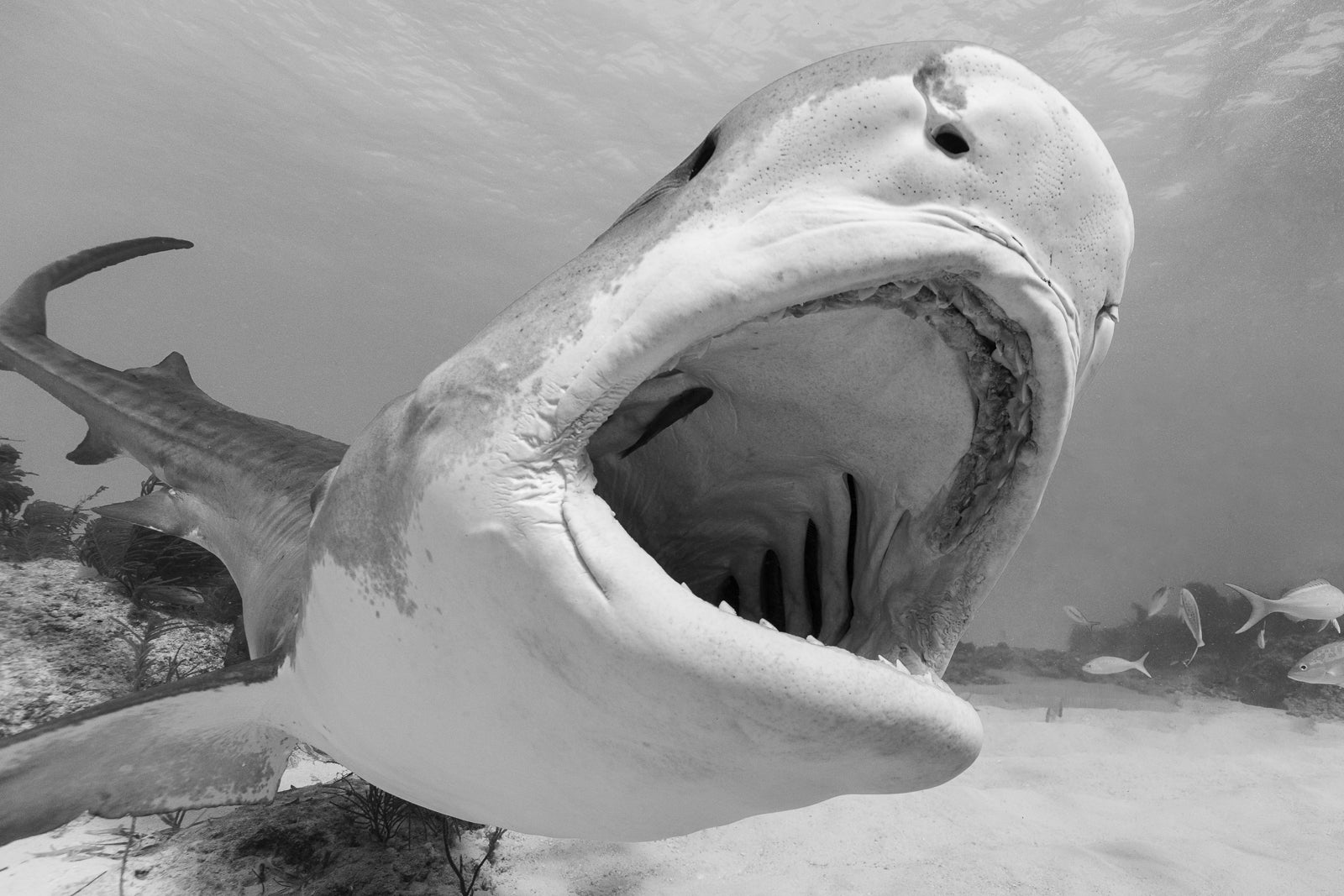
Tiger sharks have some of the most recognizable jaws in the ocean. Their mouths are wide, their jaws are powerful, and their teeth are shaped almost like curved saw blades. Each tooth has a broad cutting edge with deep serrations, allowing the shark to grip, slice, and tear through tough prey, including sea turtle shells. That design is one of the reasons tiger sharks can eat such a wide variety of animals. Their large mouth gives them room to bite down on bulky prey, while the shape of their teeth allows them to cut instead of simply puncture. Studies on tiger shark teeth have also shown that they require surprisingly little force to penetrate prey once the serrated edge makes contact. The other interesting thing about shark teeth is that they are never permanent. Tiger sharks have several rows developing behind the front teeth, almost like a conveyor belt. When one tooth breaks or falls out, another gradually moves forward to replace it, giving the shark a constant supply throughout its life. I called this image “Jaw Dropper” because seeing a tiger shark open its mouth directly in front of my camera gives you a completely different appreciation for how perfectly its jaws are built for survival.